

If you’ve managed to reach the stage on Instagram where you’re being sent items or paid for promotions to share with your followers, well done! That’s brilliant! It takes a lot of effort to reach this point, but once you’re there, there are a few things you have to understand about correctly declaring your Ads.
The ASA or Advertising Standards Authority have a set of rules to follow to make sure you are properly declaring your content. They have a brilliant guide here that will go into way more detail than I will, but I hope I can make this simple and easy to follow for Instagram’s platform.
What is an Ad?
An Ad is when you are working with brands to produce content on your platforms. This could be in the form of a paid promotion, or what is commonly referred to as Gifted i.e. you are not being paid, but have received an item at no cost (we’ll go into this wording shortly).
Understanding when you are advertising a product/service
I’ve stated what an Ad is, but I know some people still don’t have a firm grasp of whether their post is an Ad or not. So, directly from the ASA website, I’ve taken this paragraph:
When a brand gives an influencer a ‘payment’ (i.e. any form of monetary payment, free loan of a product/service, any incentive and/or commission or a product/service has been given free), any resulting posts promoting the brand become subject to consumer protection law enforced by the Competition and Markets Authority (CMA). When a brand also has editorial control over the content, the ASA can apply the CAP Code as well.
What needs to be declared as an Ad?
The best way to look at this is, if in doubt, Ad. An Ad is anything you are working on with a brand in which they have either paid you or have some creative control over your content (such as asking you to feature as part of a certain campaign, giving you a discount code etc).
If you have received a t-shirt from a brand and haven’t agreed/promised any content, but do upload a photo, this is what is considered a sponsorship in the eyes of the ASA. It isn’t something they cover or pursue, however, the CMA who are also involved in advertising rulings, ask that these partnerships are still made clear. A lot of users will label these posts Gifted, but this can be confusing terminology and really should just refer to things you have been sent as a present (obviously you don’t need to start declaring your Christmas presents and gifted), not for promotion. The ASA does not recognise Gifted as being a correct way to label these collaborations, so see below for a simple guide to what each partnership can be referred to as.
Paid for promotion (money has been exchanged to promote a product): Ad
Sent an item with no payment (this applies to any form of item you would have previously referred to as gifted): Ad – PR Product
Attending a brand event: Ad – PR Event
Visiting a location to create content about it: Ad – Press Trip
Affiliate marketing (either an affiliate link or discount code): Ad – Affiliate
Looking specifically at book bloggers, if you are receiving a book to review and feature this on your Instagram, this is fitting into the second category I have listed, an item sent with no payment, and should be declared. You can use Ad – PR Product for this or if you’d like to state this was sent for review, Ad – Review Copy. Again, this is all about being transparent and telling your followers you have received the item for this reason. A book is no different from being sent an item or clothing for example, and if it is the featured item in your post, you need to declare it.
In their guide, the ASA recommend staying away from terms such as: sponsored, spon, sent by, in association with, thanks to X for sending me this.
Useful articles and posts:
IAB UK have a really handy infographic to help you understand if you need to disclose your content, I’d really advise taking a look at it, it couldn’t make it more simple.
What’s Hot Blog has a really good article about why influencers should stop using the term gifted, I’d highly advise giving it a read.
VixMeldrew has put together a really useful graphic on Instagram that offers a quick and easy guide.
How should I declare an Ad?
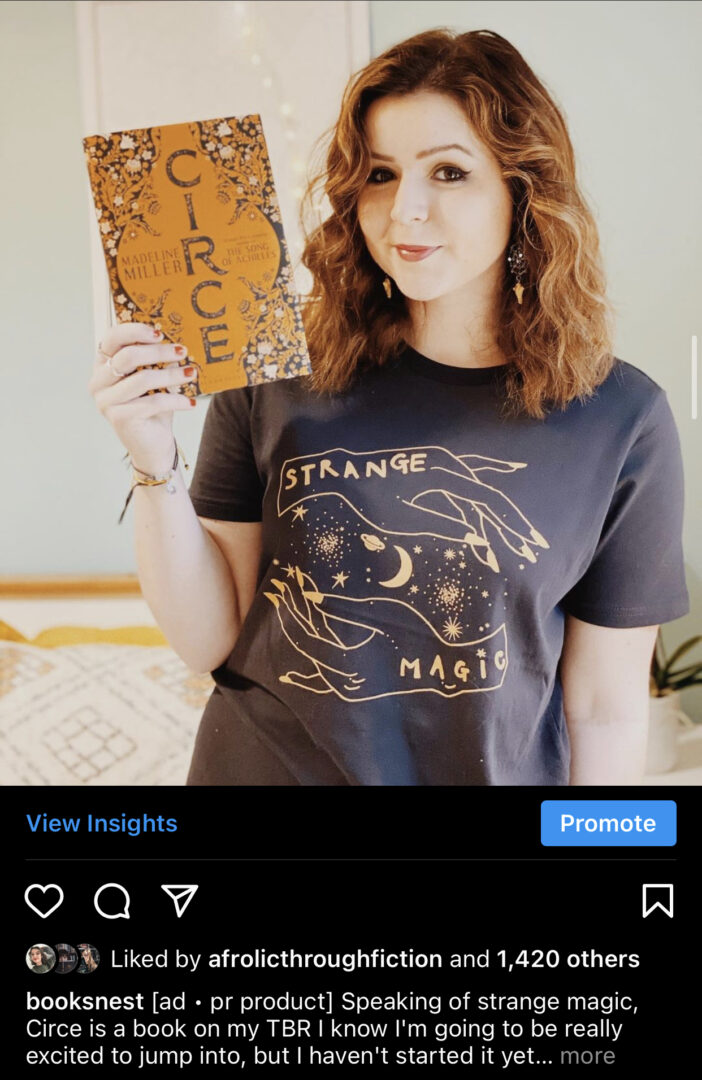
As I’ve listed above, there are several terms you should be using to declare your Ad. But in terms of how to declare it, you should be adding this clearly in the caption for your photo. One of the things the ASA is pretty clear on, is you need to make this declaration quite obvious and clear as not to mislead your followers. See below for an example of how I have listed a recent PR Product. I’ve put this tag right at the start of the caption so this can be clearly seen for anyone interacting with my post. I have then gone into more detail about the product and brand below the fold of my caption.
Why do I need to declare an Ad?
Declaring an Ad is not only in keeping with the ASA rules, but it is also fair and transparent to your followers. The more people that start disclosing their Ads, the more common it will be among all influencers. I think at the moment people can get quite confused about the proper way to do this, but I hope my post helps. Basically, just be honest and open and clear. Don’t try to hide that your post is an Ad.
Hopefully, as more people declare Ads in this way, the more this will become the norm. This is the correct way to create your content and if you’re going to be creating this content, you need to be doing it properly. It should be fairly simple to follow, but it just needs everyone to do it for it to become the recognised approach.
But doesn’t content declared as an Ad perform worse than normal posts?
I wrote a whole blog post about why Ads don’t perform as well on Instagram, but do you know what? I think the more people learn about Ads, the more they engage with them and want to support the creators. Ads can be seen as disingenuous, especially if they’re not made in a genuine and passionate way. So this can be why sometimes users see less engagement on these posts. But I can honestly say that I have noticed my Ad posts being just as popular as my regular posts as of late! Regardless of this though, ASA and CMA rules dictate we must declare our partnerships correctly, so this is what we need to do. This responsibility comes hand in hand with being a content creator and working on these promotions.


Thank you for this – really useful! 🙂